Marc Scibelli
Marc Scibelli

Day Zero Value: Onboarding innovation for Panoptica

To address significant drop off in the onboarding process of Panoptica, we launched a comprehensive research and redesign initiative to identify key friction points and opportunities for improvement
Challenge

Challenge

Challenge

Challenge

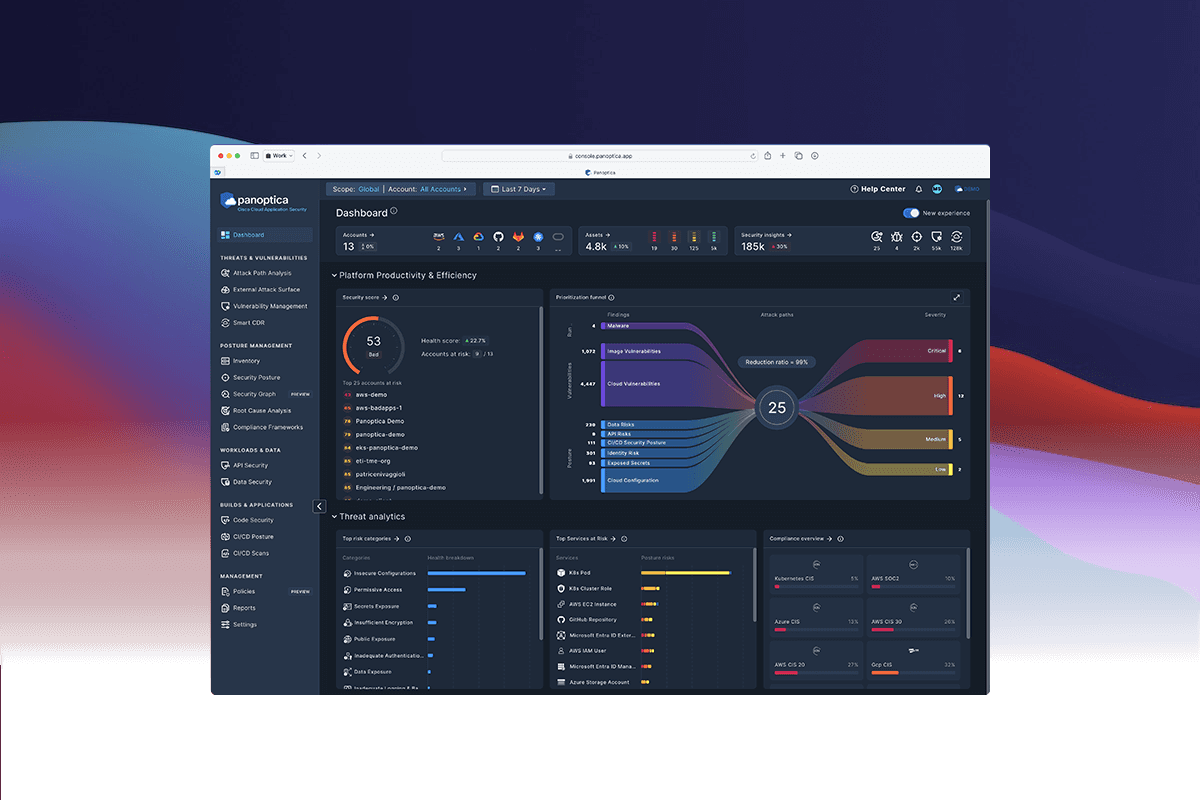
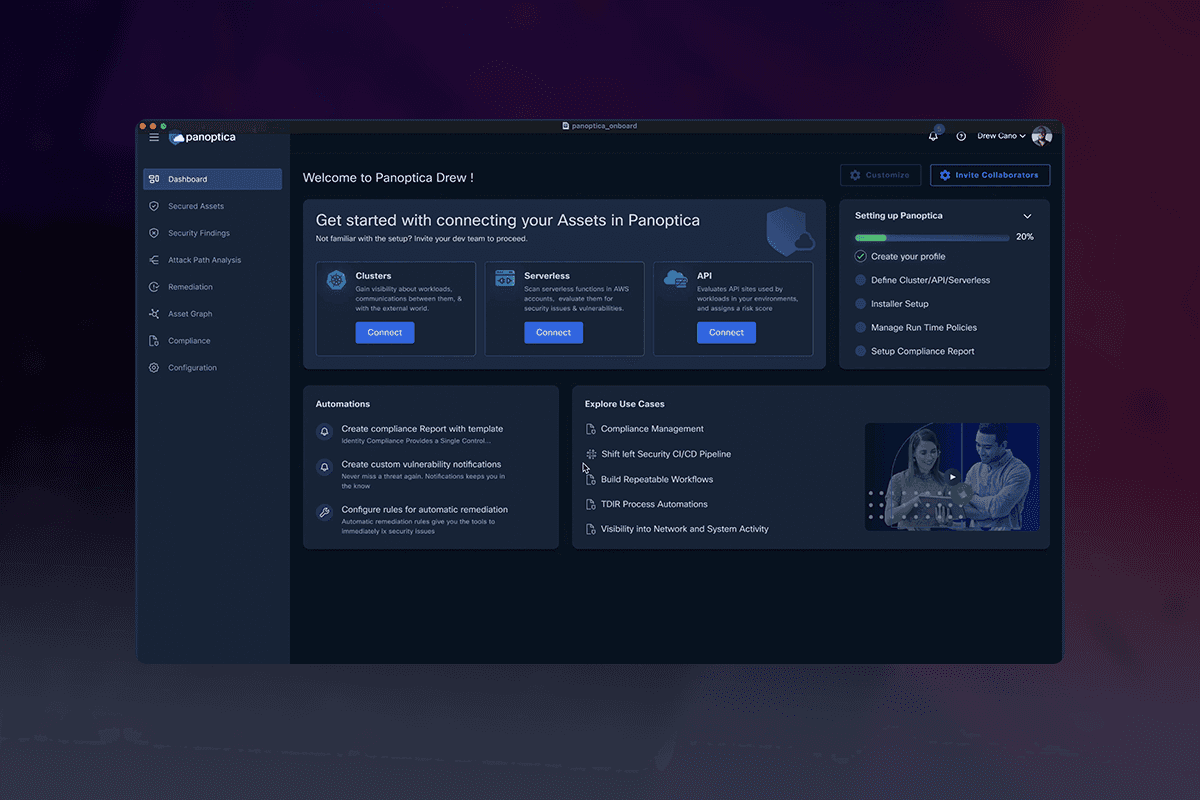
Despite its cutting-edge capabilities, the initial user onboarding and empty state experiences of Panoptica presented significant challenges. Users often reported feeling overwhelmed during onboarding and confused when encountering empty states, which slowed down their ability to effectively utilize the platform. These initial interaction points are crucial as they set the tone for user engagement and long-term satisfaction.
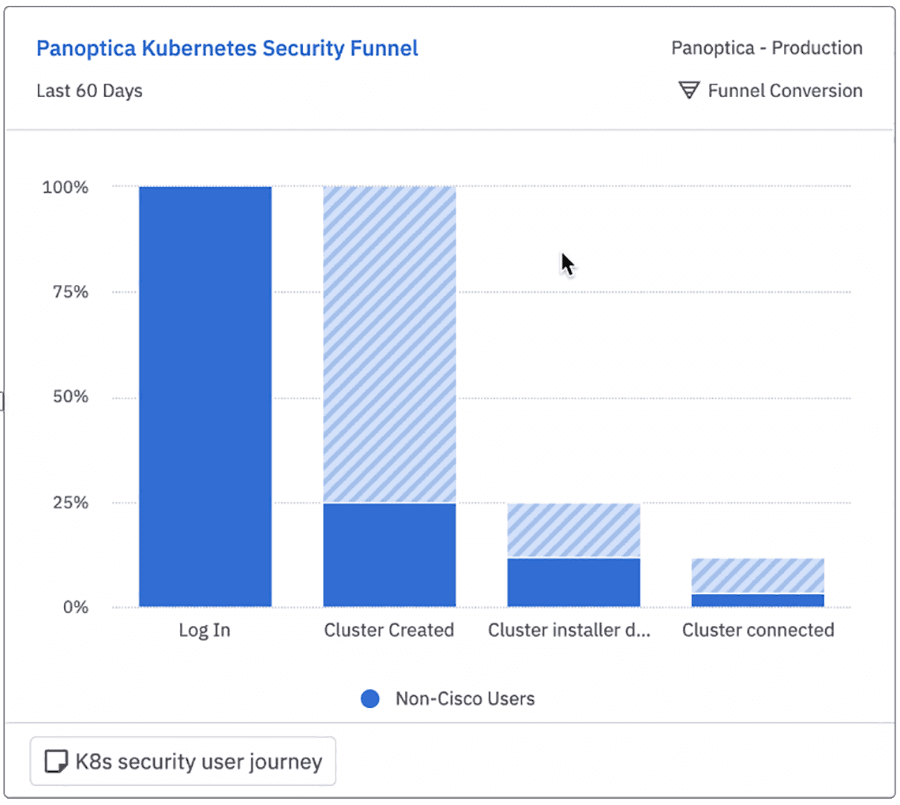
Product analytics showed that less than 8% of customers who signed up would connect a cluster, a necessary part of using Panoptica. Users would essentially drop out of the product before interacting with it at all.
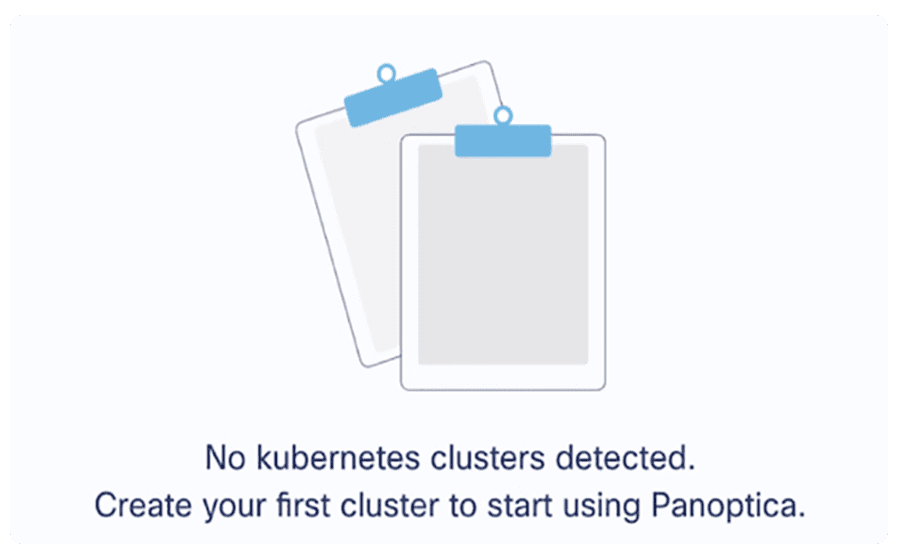
Additionally. Empty states were overlooked, and lacked any information to help the user understand the value of the product's key features.

Organization

Cisco

Role

Design Leader
How do we design human-agent interfaces that are consistent, comprehensible and scalable across products?

Approach

Approach

Creating Lens involved overcoming several complex hurdles. The primary challenge was to design an AI system that could accurately understand and interact with diverse UI objects across different platforms and applications.

The AI needed to provide context-aware assistance in real-time, maintain an intuitive user experience, and build user trust through verifiable interactions. Additionally, multi-selection and relational understanding between different UI objects added layers of complexity to the project.

Process

Process

Our goal for revamping the onboarding experience was to create a seamless, intuitive, and engaging first interaction for users.

By conducting detailed user interviews and gathering feedback, we identified key friction points and opportunities for improvement.
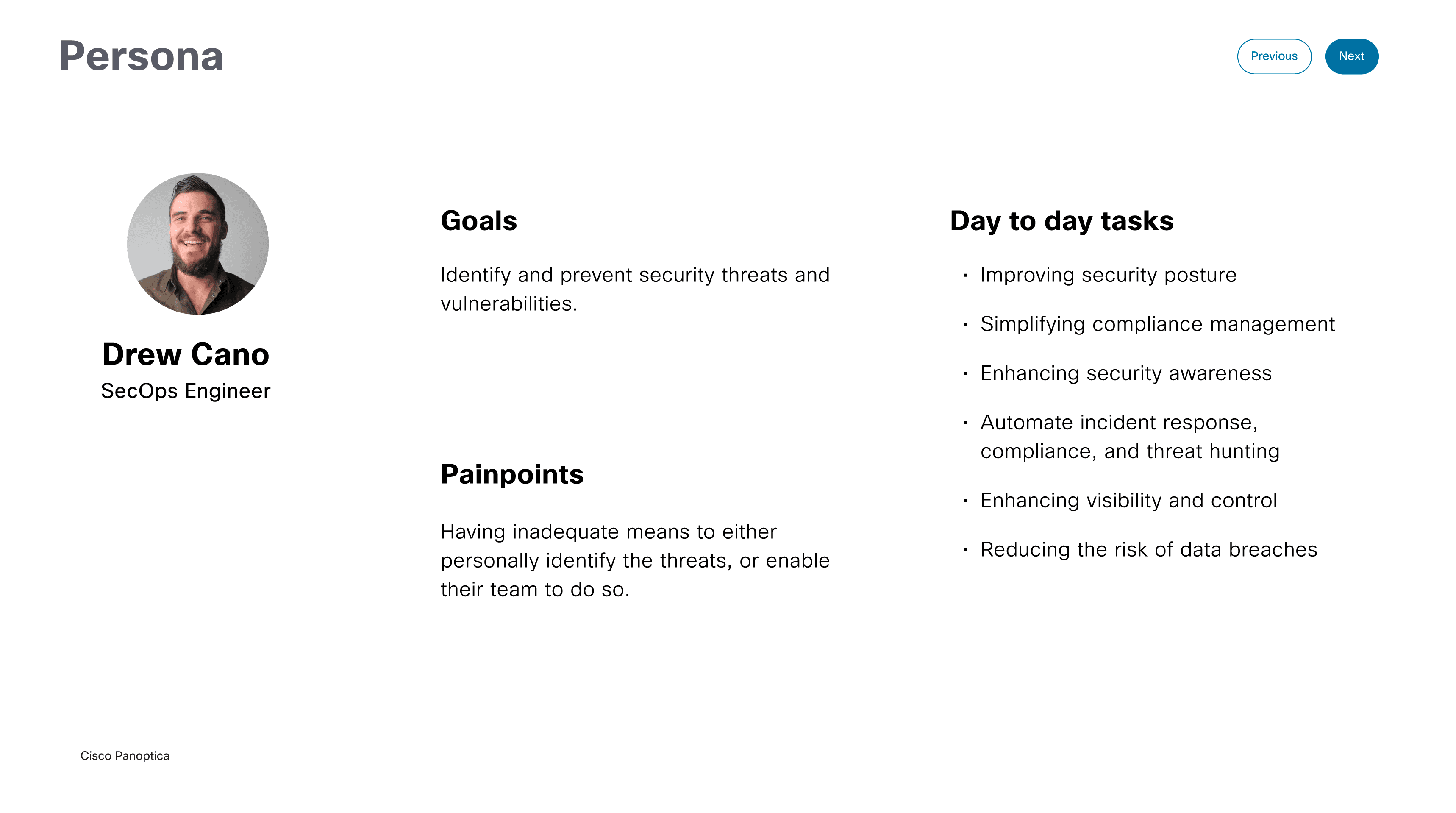
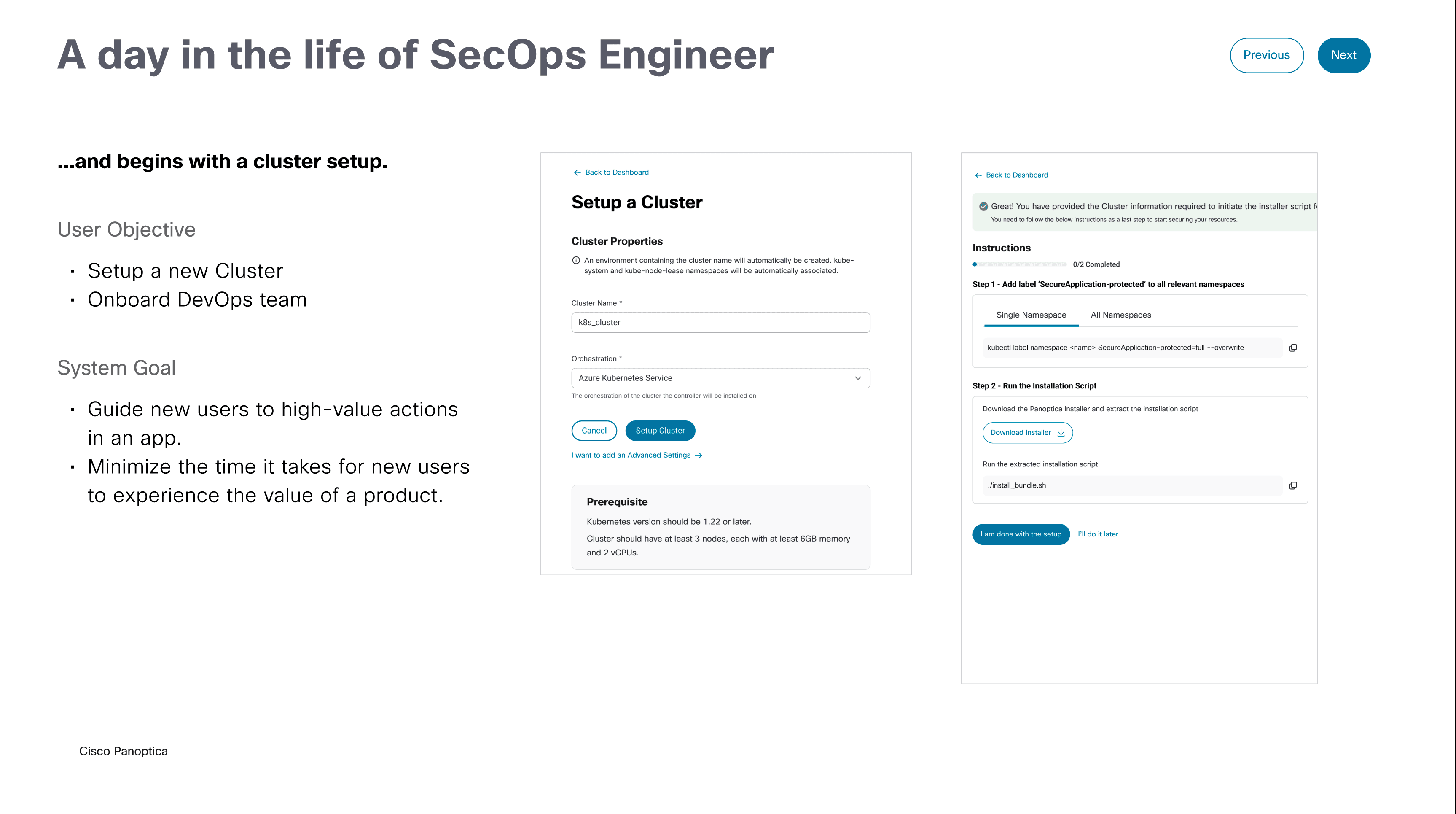
In response we developed guided walkthroughs, interactive tutorials, and contextually aware help tips to enhance user understanding and reduce the learning curve.

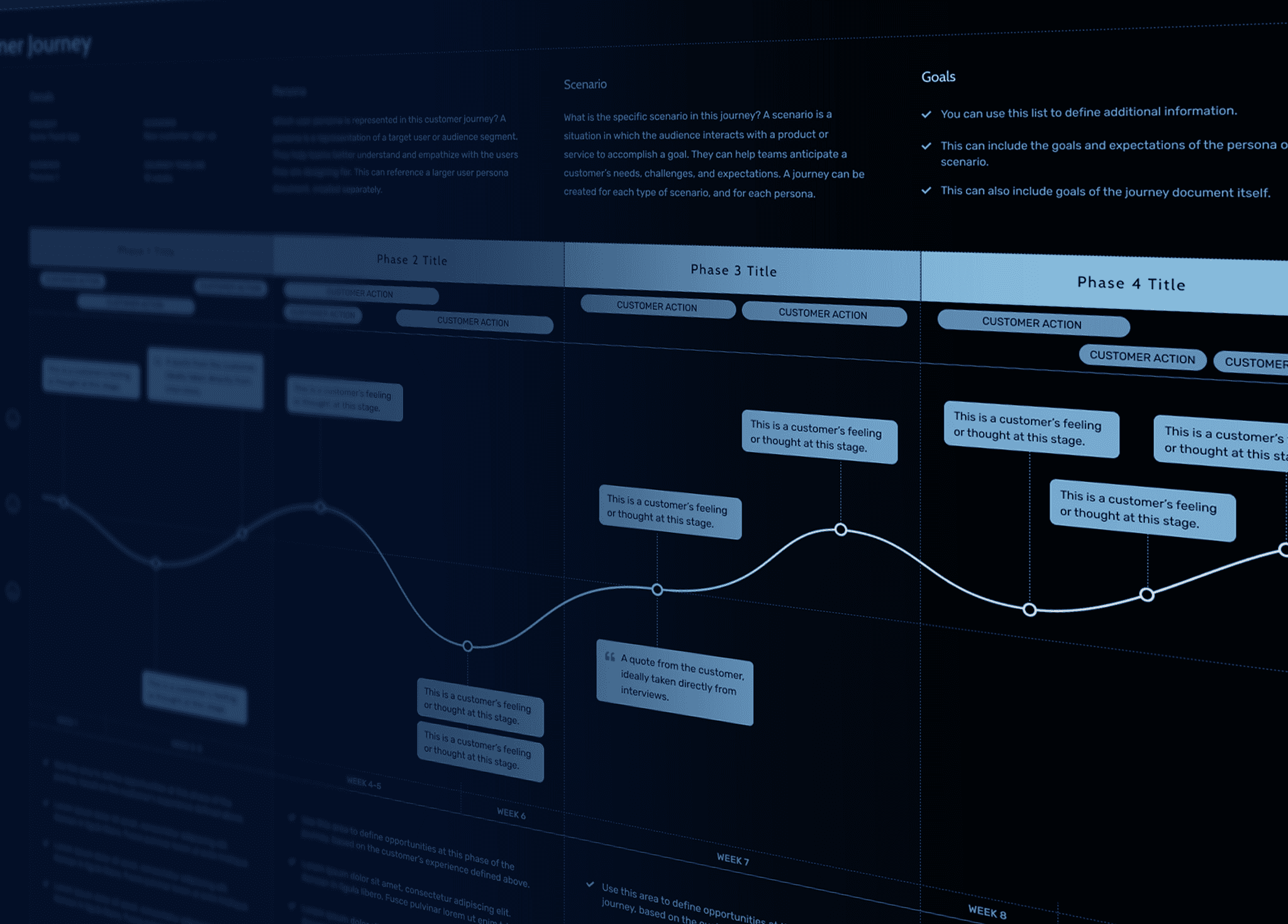
Through user research we identified several reasons for the significant drop off they included the following insights:

  • Not sure what to do next

  • Not the user responsible with the right information

  • Not sure it's worth the time.

Show new users
high-value actions quickly

Introduce the "Right-Friction"
to the onboarding experience

Present value
early and often

Show new users
high-value actions quickly

Introduce the "Right-Friction"
to the onboarding experience

Present value
early and often

Show new users
high-value actions quickly

Introduce the "Right-Friction"
to the onboarding experience

Present value
early and often

Challenge

Creating Lens involved overcoming several complex hurdles. The primary challenge was to design an AI system that could accurately understand and interact with diverse UI objects across different platforms and applications.

The AI needed to provide context-aware assistance in real-time, maintain an intuitive user experience, and build user trust through verifiable interactions. Additionally, multi-selection and relational understanding between different UI objects added layers of complexity to the project.

Outcome

Outcome

A comprehensive plan to improve the cluster connection process was initiated, it included:

  • Define the tasks for the job performer and the techniques for doing so

  • Show the personas' main features relevant to automation to reduce time to value

By using the information provided on Day-0, the user should get familiar with the product and be motivated to take the appropriate actions to integrate Panoptica.


In addition, we created a content plan to maximize the empty state areas to illustrate more informative and action-oriented opportunities.

Instead of showing blank spaces, the new designs included helpful suggestions, examples, and clear calls-to-action that guide users on the value they will derive when they take the time to engage with the platform.

Extensive prototyping and value-first onboard journey innovations led to a significant increase in setup completion

Extensive prototyping and value-first onboard journey innovations led to a significant increase in setup completion

Extensive prototyping and value-first onboard journey innovations led to a significant increase in setup completion

Transformative enhancements to Panoptica onboarding and empty state areas elevate the first-time user experience by demonstrating immediate feature value and maximizing the efficiency of cluster connections.

Transformative enhancements to Panoptica onboarding and empty state areas elevate the first-time user experience by demonstrating immediate feature value and maximizing the efficiency of cluster connections.

Transformative enhancements to Panoptica onboarding and empty state areas elevate the first-time user experience by demonstrating immediate feature value and maximizing the efficiency of cluster connections.

Challenge

Creating Lens involved overcoming several complex hurdles. The primary challenge was to design an AI system that could accurately understand and interact with diverse UI objects across different platforms and applications.

The AI needed to provide context-aware assistance in real-time, maintain an intuitive user experience, and build user trust through verifiable interactions. Additionally, multi-selection and relational understanding between different UI objects added layers of complexity to the project.


In addition, we created a content plan to maximize the empty state areas to illustrate more informative and action-oriented opportunities.

Instead of showing blank spaces, the new designs included helpful suggestions, examples, and clear calls-to-action that guide users on the value they will derive when they take the time to engage with the platform.

Outcome


In addition, we created a content plan to maximize the empty state areas to illustrate more informative and action-oriented opportunities.

Instead of showing blank spaces, the new designs included helpful suggestions, examples, and clear calls-to-action that guide users on the value they will derive when they take the time to engage with the platform.

The HAX Framework

The design principles gave us a foundation, but teams still needed a way to apply them consistently in real products. We set out to create a system that connects those principles to the tools, components, and checks developers use every day. That effort became HAX—a unified framework for designing, building, and governing meaningful human agent collaboration.

HAX
Principles:

Design for collaboration

Five research based, human-centered rules: Clarity, Control, Recovery, Collaboration, and Traceability that define trustworthy agent behavior.

HAX
SDK:

Build with
consistency

Toolkit that turns those principles into schemas, components, and checks so agents act and explain predictably.

Custom Repositories:

Reusable Explainability:

Behavior layer that travels with the agent. The same evidence, reasoning, and actions appear across any product or surface.

Portable Explainability:

Consistency Everywhere:

Behavior layer that travels with the agent. The same evidence, reasoning, and actions appear across any product or surface.

The HAX Framework

The design principles gave us a foundation, but teams still needed a way to apply them consistently in real products. We set out to create a system that connects those principles to the tools, components, and checks developers use every day. That effort became HAX—a unified framework for designing, building, and governing meaningful human agent collaboration.

The design principles gave us a foundation, but teams still needed a way to apply them consistently in real products. We set out to create a system that connects those principles to the tools, components, and checks developers use every day. That effort became HAX—a unified framework for designing, building, and governing meaningful human agent collaboration.

HAX
Principles:

Design for collaboration

Five research based, human-centered rules: Clarity, Control, Recovery, Collaboration, and Traceability that define trustworthy agent behavior.

HAX
SDK:

Build with
consistency

Toolkit that turns those principles into schemas, components, and checks so agents act and explain predictably.

Custom Repositories:

Reusable Explainability:

Behavior layer that travels with the agent. The same evidence, reasoning, and actions appear across any product or surface.

Portable Explainability:

Consistency Everywhere:

Behavior layer that travels with the agent. The same evidence, reasoning, and actions appear across any product or surface.

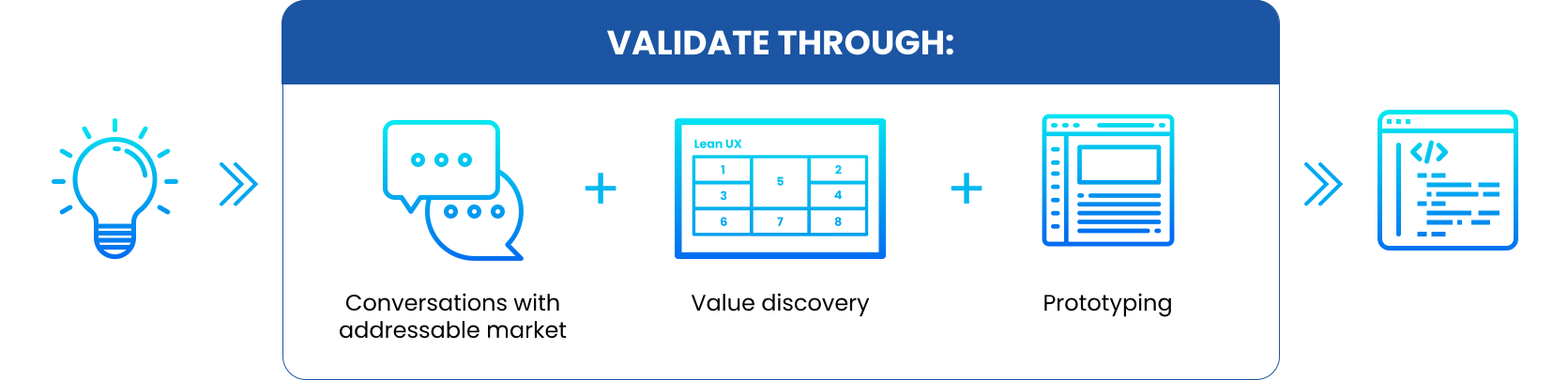
We initiated a design discovery process which enabled a systematic exploration and validation of ideas, ensuring each phase, from discovery to release, was grounded in evidence and iterative improvement.